A player can spend hours in ranked matches and still feel like their aim has stopped improving. The problem is often not effort. It is the type of practice.
VALORANT rewards precision more than raw reaction speed. Winning a duel usually depends on a chain of small habits: keeping the crosshair at the right height, stopping before shooting, controlling sensitivity, and repeating useful drills often enough for them to become automatic.
Many players focus only on flick shots because they look impressive. But consistent aim comes from making fewer mistakes before the shot even happens. A well-placed crosshair can remove the need for a dramatic correction, while poor movement or positioning can make even fast reactions ineffective.
A focused routine built around fundamentals can produce better results than random practice sessions. The goal is not to shoot more. The goal is to make every practice minute reinforce the skills that appear in real matches.
Crosshair Placement Is the Foundation of Better Aim
Aiming in VALORANT begins before an enemy appears on screen.
Strong players do not constantly move their mouse toward targets from unpredictable positions. They prepare their crosshair so that enemies appear close to where they are already aiming. This reduces the distance required for correction and creates more opportunities for accurate first shots.
The first habit to build is keeping the crosshair at head level. Many missed shots happen because players look toward the ground while moving, forcing them to adjust upward during a fight. Those extra milliseconds can decide a duel.
A simple drill is to enter a match or practice range with one goal: never let the crosshair drift away from common enemy head positions. Do not worry about speed at first. Accuracy comes from repeating the correct movement.
Map knowledge also affects crosshair placement. Every angle has likely enemy positions. Instead of clearing corners with the crosshair moving randomly, pre-aim areas where opponents are most likely to stand.
VOD review can help identify repeated mistakes. Looking back at lost fights and checking crosshair position reveals patterns that are difficult to notice during a match. A player might discover that they consistently aim too low when entering sites or move their crosshair too far away from common holding spots.
Movement Control Separates Good Aim From Inconsistent Aim
Aiming is not only about mouse control. VALORANT’s shooting accuracy depends heavily on movement.
A common mistake is firing while still moving. Running shots are unreliable because weapon accuracy drops when the character is not settled. Good players create a brief moment of stability before shooting.
Counter-strafing is one technique players use to stop quickly before firing. By tapping the opposite movement key, players can reduce movement error and create cleaner shots. It takes practice because the timing must become automatic.
A useful range exercise is to focus on stopping completely before each shot. Instead of rushing through targets, build the connection between movement and accuracy:
- Move into position.
- Stop.
- Place the crosshair.
- Fire a controlled shot.
The speed comes later. Building the correct sequence first prevents sloppy habits from becoming permanent.
Relaxation also matters. Tightening your grip during intense fights can make small mouse adjustments less precise. Smooth control usually produces better results than forcing fast movements.
Sensitivity Should Support Your Style, Not Change Every Week
Mouse sensitivity is one of the most discussed parts of aim training, but there is no universal perfect setting.
A sensitivity that works for one player may feel uncomfortable for another. The useful question is not “What setting do professionals use?” but “Can I control this setting consistently?”
High sensitivity can make quick turns easier but may make tiny corrections harder. Lower sensitivity can improve precision but requires more physical mouse movement.
Signs your sensitivity may need adjustment include:
- Small corrections feel difficult because the crosshair jumps too far.
- Turning around feels slow and uncomfortable.
- Tracking moving targets feels inconsistent.
Once you find a comfortable setting, give yourself time to adapt. Changing sensitivity every few days prevents muscle memory from developing. Consistency matters more than constantly searching for a better number.
Your physical setup can affect comfort as well. Desk height, chair position, and available mouse space all influence control. A stable setup allows you to repeat the same movements during long practice sessions.
Build an Aim Routine Around Specific Skills
Random practice can feel productive because you are always doing something. But improvement usually comes faster when each drill has a clear purpose.
A balanced VALORANT aim routine can include several types of practice:
Warm Up With Controlled Shots
Start with simple drills that reinforce accuracy. Practice hitting targets while focusing on head-level placement and clean mouse movement.
The goal is not to chase a high score. It is to prepare your mechanics for the match ahead.
Train Different Types of Aim
Different situations require different skills.
Flicking helps when you need to move quickly between targets. Tracking helps when opponents are moving unpredictably. Micro-adjustments help when your crosshair is close but not perfectly aligned.
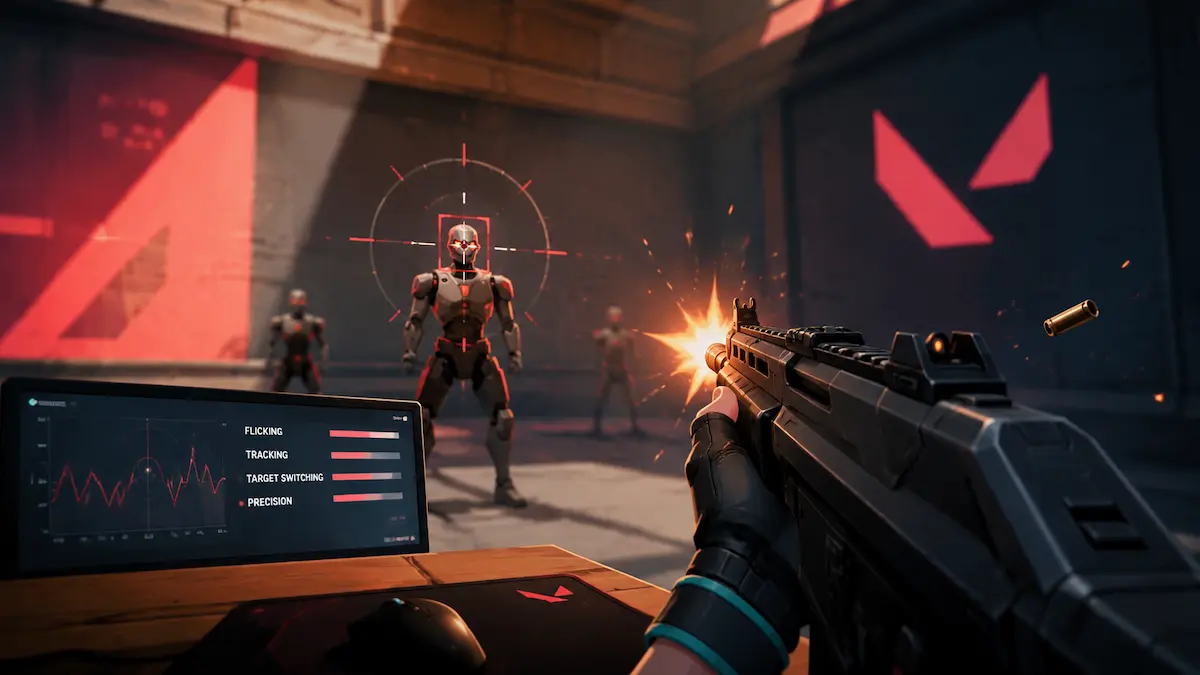
A browser-based practice option such as OKIAIMX VALORANT Aim Trainer can fit into a warm-up routine by giving players focused exercises for flicking, tracking, target switching, and precision. A short session before playing can help create a consistent starting point instead of entering matches cold.
Transfer Practice Into Real Matches
Aim trainers are useful, but they do not fully recreate VALORANT situations. A player still needs to practice clearing angles, taking fights, and making decisions under pressure.
Deathmatch is valuable because it creates frequent gunfights. However, the purpose should be improvement rather than winning the scoreboard. Focus on crosshair placement, first-shot accuracy, and avoiding rushed sprays.
Swiftplay and unrated matches can also provide opportunities to practice mechanics without the same pressure as ranked games.
A Simple Weekly Schedule for Aim Improvement
A routine does not need to consume several hours every day. Regular practice usually beats occasional long sessions.
A practical schedule could look like this:
| Day | Practice Focus |
|---|---|
| Monday | Range drills + aim trainer + Deathmatch |
| Tuesday | Deathmatch + review one recorded match |
| Wednesday | Range drills + precision practice |
| Thursday | Deathmatch + movement practice |
| Friday | Aim trainer + ranked warm-up |
| Saturday | Swiftplay focused on taking clean fights |
| Sunday | Light practice or rest |
The exact schedule can change, but the principle remains the same: each session should have a purpose.
Thirty minutes of focused training can be more useful than several hours of unfocused play. The difference is attention. Players improve when they notice mistakes and actively correct them.
Mistakes That Slow Down Aim Progress
Some habits make aim training less effective even when players practice regularly.
Changing Settings Too Often
Trying a new sensitivity or crosshair every week can create the feeling of progress while preventing consistency. Give adjustments enough time before deciding they do not work.
Practicing Only Flicks
Flick shots are exciting, but many VALORANT fights are decided by positioning and preparation. Crosshair placement often creates easier opportunities than relying on reaction speed alone.
Ignoring Movement
A player may have strong mouse control but still lose fights because they shoot while moving or fail to stop before firing.
Treating Aim Training as Separate From Gameplay
The purpose of drills is to improve match performance. After practicing, players should pay attention to whether those skills appear during actual rounds.
For example, after a crosshair placement session, notice whether your aim stays at head level while entering sites. After movement drills, check whether you stop before taking fights.
Track Improvement Beyond Your Rank
Rank is one measure of progress, but it is not the only one.
A player can improve mechanically before their rank changes. Useful signs include:
- Winning more first-shot duels.
- Needing fewer corrections after seeing an enemy.
- Staying calmer during close fights.
- Maintaining better crosshair placement throughout a match.
- Missing fewer easy opportunities.
Keeping short notes after practice sessions can help reveal patterns. Instead of writing “my aim was bad,” record something specific:
- Crosshair dropped during site entries.
- Panicked and sprayed at long range.
- Overshot targets with high-speed flicks.
Specific observations create specific solutions.
Aim improvement in VALORANT is built through repetition, but repetition alone is not enough. The most effective practice combines correct mechanics, focused drills, and regular review of mistakes.
Players who treat aim as a skill to develop—not a talent they either have or lack—usually find clearer ways to improve. Small corrections repeated over time create the consistency needed for better fights, better decisions, and stronger performances.